Mølla på Grim
Svendsengruppen, the family-owned group behind Mølla på Grim, is turning a 380-year-old mill in Kristiansand into a neighbourhood of around 315 homes and 11,110 m² of commercial space. Nonspace developed the place identity, naming architecture, brand strategy and communication platform.
Highlights


About the project
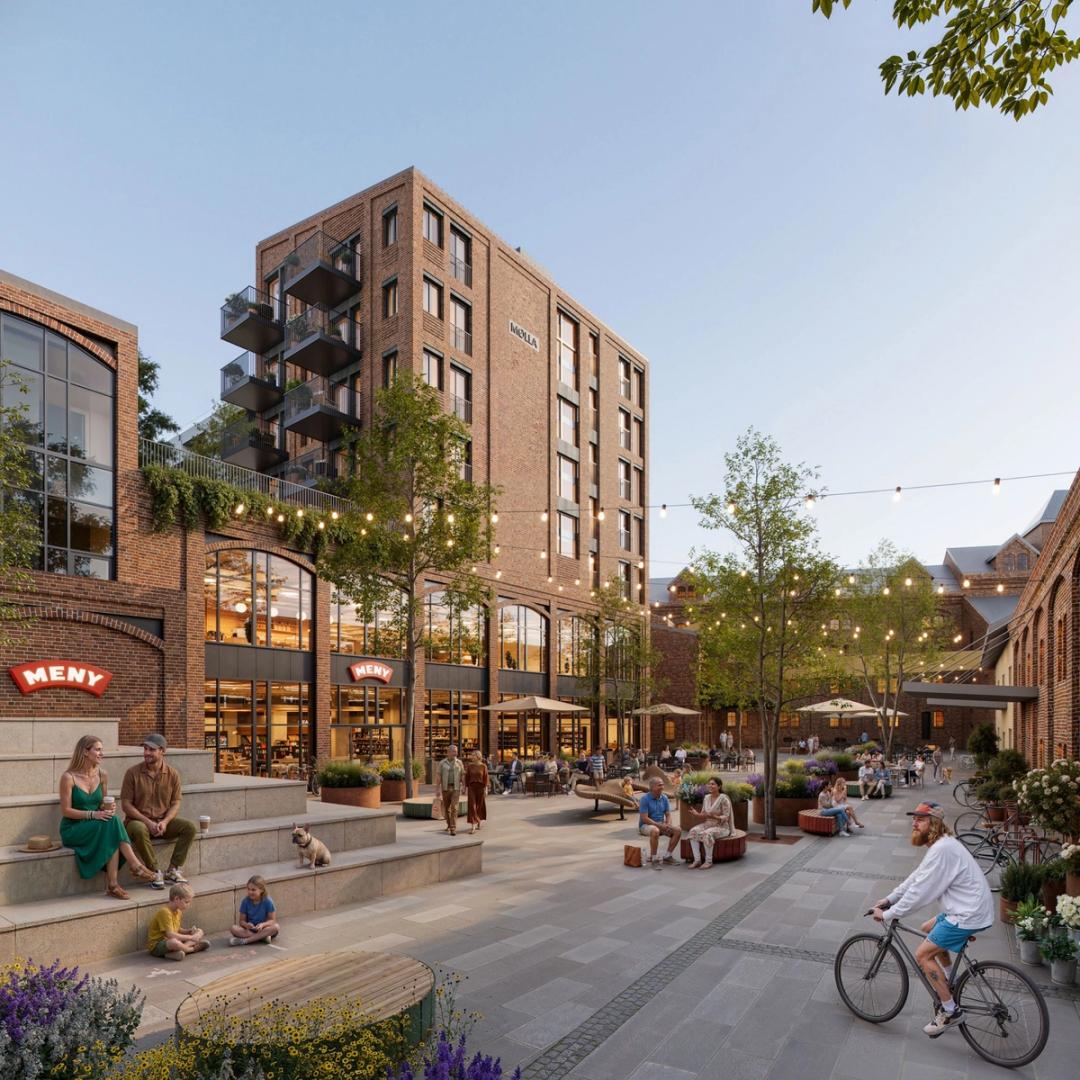
Mølla på Grim is the transformation of a 380-year-old mill in Kristiansand into a living neighbourhood of around 315 homes and 11,110 m² of commercial space.
The site is owned and developed by Svendsengruppen, the family-owned Kristiansand group behind the project, together with NorgesGruppen, Norway's largest grocery and retail group, whose retail anchors everyday commerce and footfall from day one.
Most residential developments sell a future with no past to stand on. Mølla på Grim had the opposite: 380 years of history, a working community with Vinbaren and the artist collective GRAC, and more than twelve overlapping names with no system between them.
The identity had to work on several levels at once, commercially, culturally and locally. It had to carry the sale of homes through three building phases and the development stages to come, and just as much the activation, meeting places and everyday life that build a neighbourhood and let it grow stronger over time.
Commercial ambition, cultural credibility and local belonging could not be traded against each other. They had to reinforce each other. Holding that balance, selling homes while building a place that lasts, is central to the project's ambition.
Nonspace built a naming architecture that works as a sales structure today and as the place's identity for the long term. Three tiers hold it together: Mølla as the core identity, the history and life that binds the area; “på Grim” as the anchor that roots it in the city, Mølla as identity and Grim as belonging; and a family of sub-names, Mølleparken, Møllehagen and Mølleplassen, one for each building phase.
The same names that structure and sell the homes now become the streets, squares and addresses people live by later, extended through a wayfinding layer of Mølletorvet, Mølletrappen and Møllegården.
On that foundation Nonspace built the brand strategy on the Brandcell® model and the communication platform, Forbindelser, working across community, culture, business and city, with the place's own past, people and future as the engine for its stories. Each audience got a distinct address: buyers, businesses and tenants, and the cultural actors who give the place its texture.
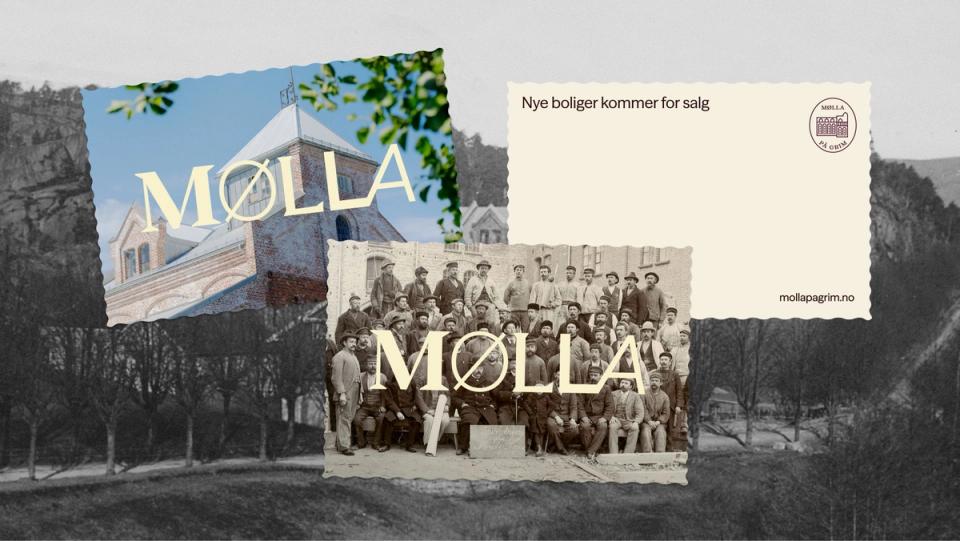
A Design DNA framework translated 380 years of industrial heritage, architectural detail and signage into living design principles, developed in collaboration with REN Arkitektur.
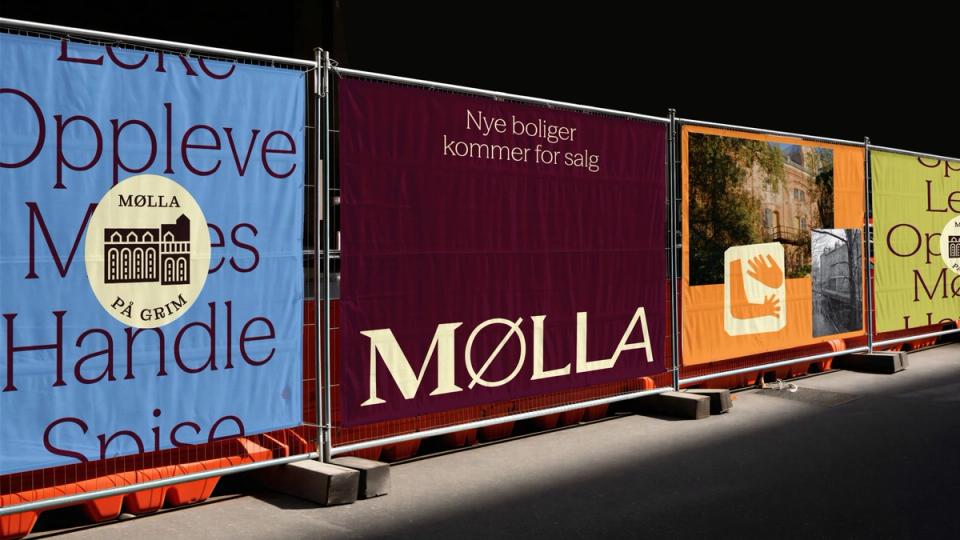
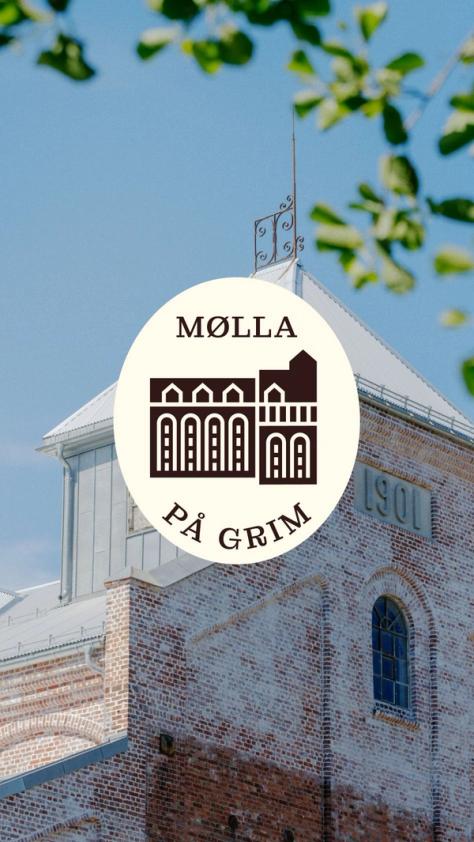
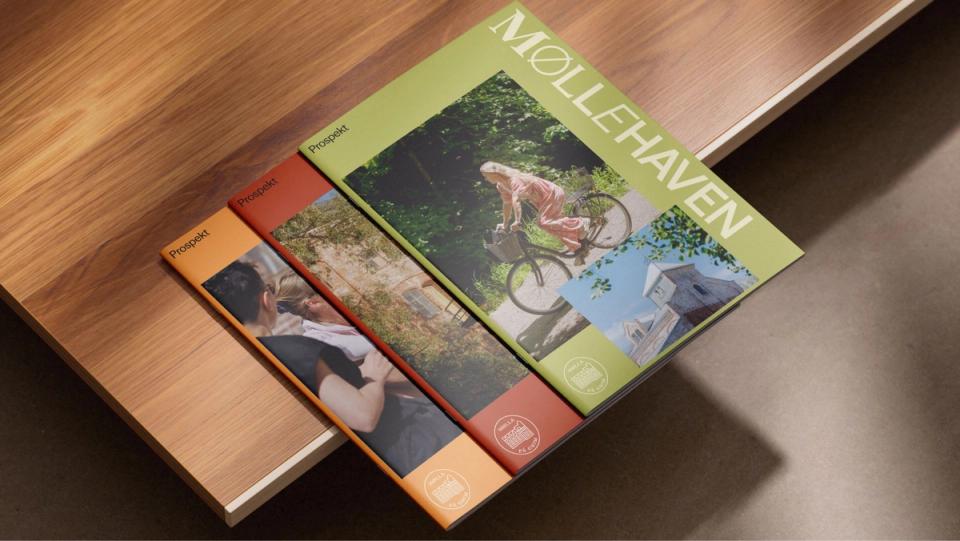
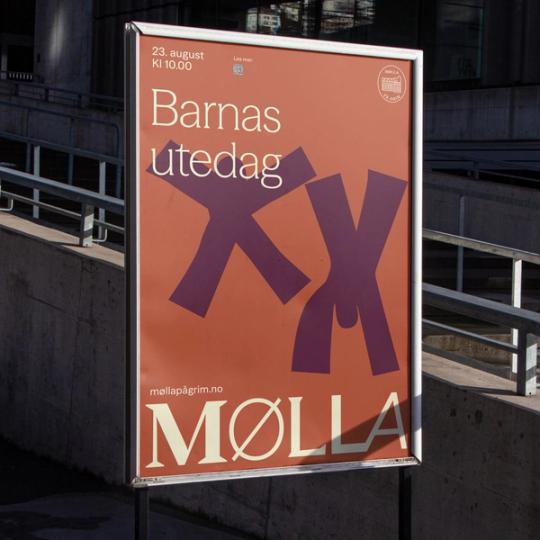
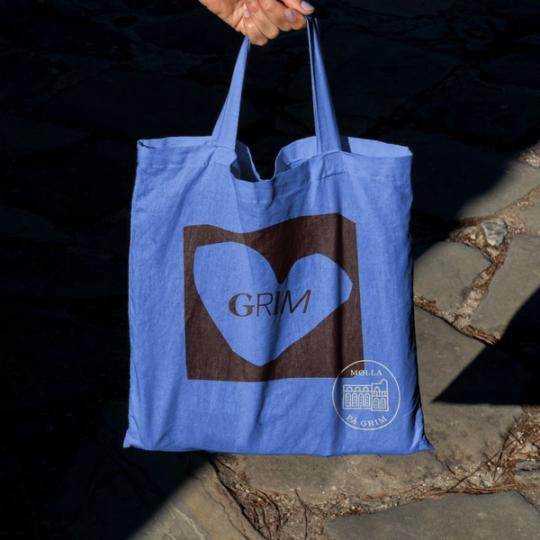
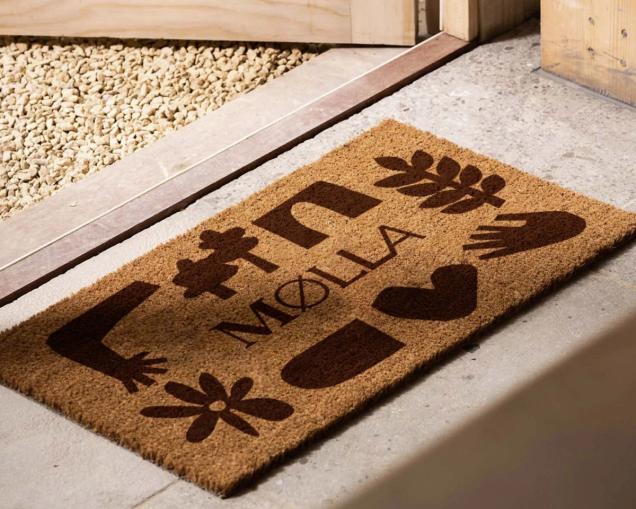
From there came two distinct visual directions and a complete system: logo, colour, typography, graphic elements and application guidance. The primary Mølla logo carries into each building-phase identity, so the brand thread holds while the expression is tuned for property marketing.
The whole system lives in Brandspace Manager, a single, always-accessible brand manual that keeps it usable for everyone who builds on it.
Local historians, neighbours and the artists on site helped bring forward the history, identity and opportunities already present in the place, with Hilde Kvivik Kavli of Svendsengruppen as the project's driving force and the one who brought it all together.
For a project like this, the process is not just the route to the outcome, it shapes the outcome. The strongest foundations are built when local insight and the developers' long-term ambitions meet strategic identity work and design expertise. It is the meeting of Nonspace, Folk, the developers and a wealth of local voices that has made Mølla på Grim both commercially relevant and genuinely rooted in the place.
The work reached well beyond brand development. Through Hilde Kvivik Kavli of Svendsengruppen, a previously unknown archive of original architectural drawings, artwork and documents from Kristiansand's industrial history was uncovered and gathered. Among the material was documentation from the development of the former grain silo that is today Kunstsilo. Nonspace connected the material to Kunstsilo and brought its leadership together with local business leaders over a dinner and event on site, so the past was not only preserved but put to work for the city's further development.
The project has laid a long-term foundation for Mølla på Grim as a residential project, a commercial area and a cultural arena. The naming and place strategy structures the sale of around 315 homes across three phases and frames 11,110 m² of commercial space. Mølla på Grim is not only the launch of a new residential project. It is an identity built to carry a whole neighbourhood through the decades ahead.
Mølla på Grim launches in summer 2026, the opening chapter of a neighbourhood set to grow through to 2040 and beyond.
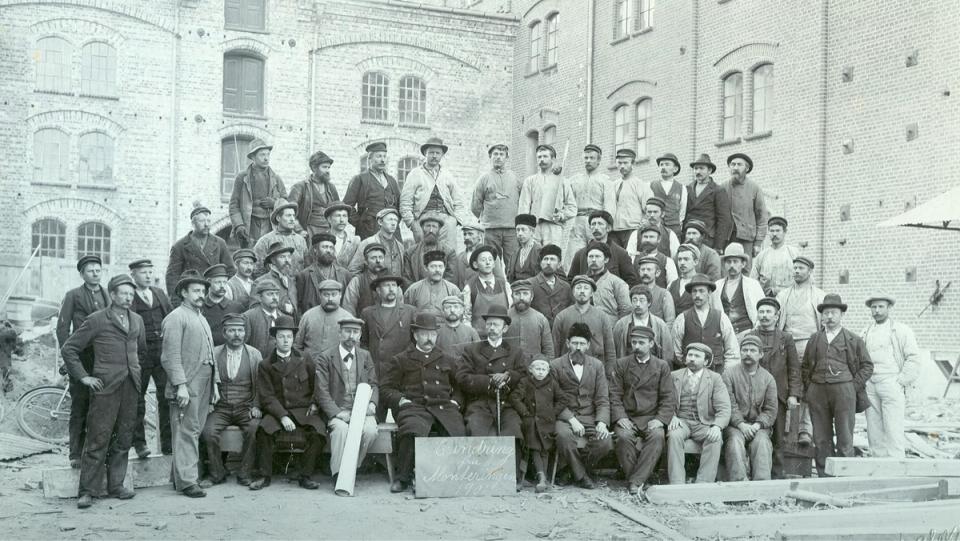
Mølla in 1901
Would you like to know more about this?
Reach out to the team, we're happy to answer questions, receive feedback or discuss the topic.

Relevant cases
Shifting Perspectives
Always Forward

For the Pioneers