Rosenborg Shop: More Than Football
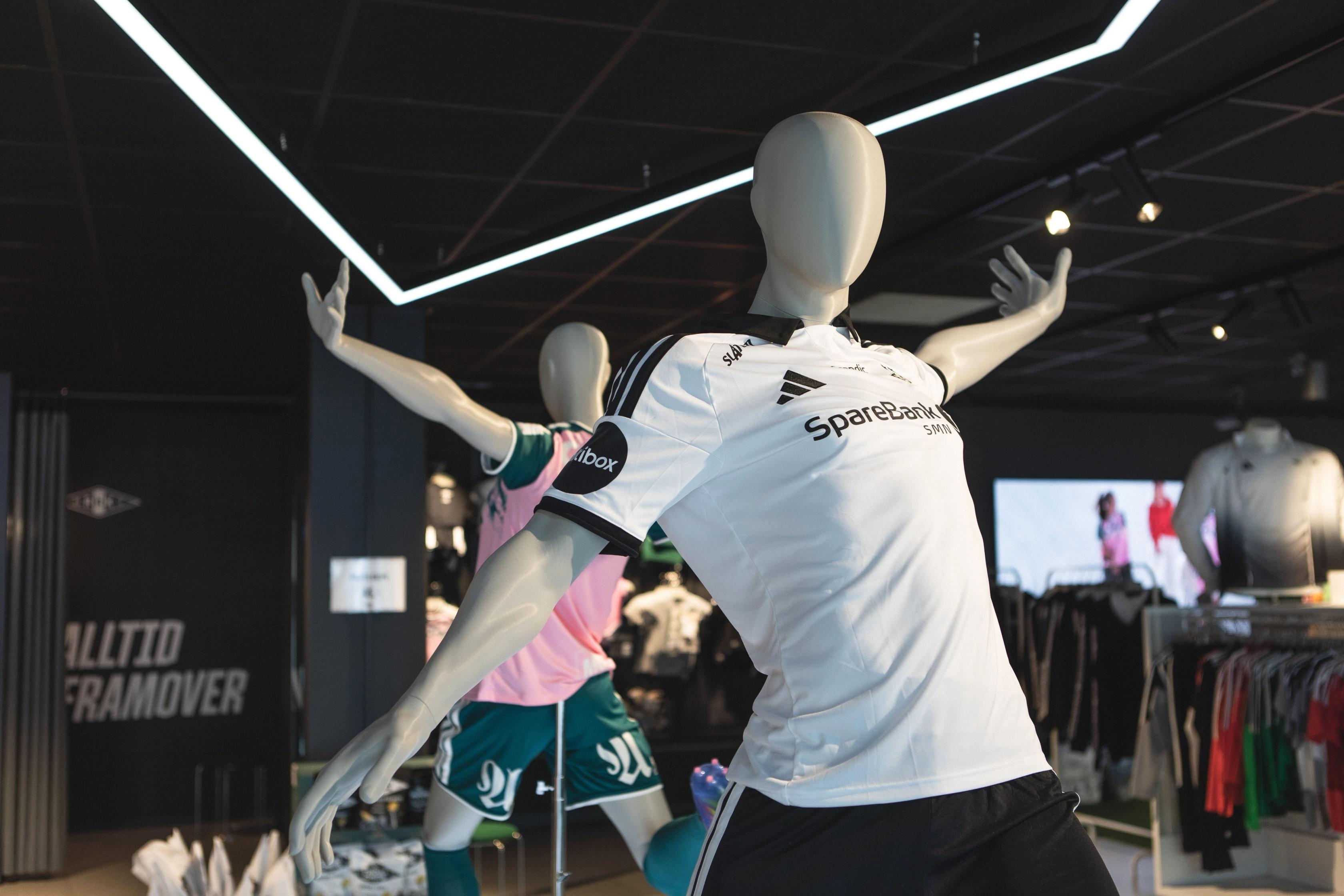
Rosenborg Shop, the club's store at Lerkendal, needed renewal and lacked an expression that felt like Rosenborg. Nonspace developed the store concept with the diamond as floor plan, four zones, the Rosenborg Playground stage, a sound installation and a history corner, and average sales per visitor rose 71 percent after reopening.
Highlights
About the project
Rosenborg Ballklub is a Norwegian football club, based in Trondheim and founded in 1917. With a record number of league titles and a strong tradition in European competitions, Rosenborg has long been a central figure in Norwegian football. The club plays its home matches at Lerkendal Stadion and is known for its deep roots in the local community, strong supporter culture, and commitment to developing talent both on and off the pitch.
Rosenborg Shop sits at the heart of Lerkendal and is one of the most important physical arenas where visitors can meet and experience Rosenborg. The brand platform Nonspace developed with the club in 2023 pointed to the shop as one of nine strategic priorities, a place that can directly reinforce all the strategic work built elsewhere.
The process began with a workshop in September 2025, where building plans, customer flow and the club's retail ambitions were mapped together with Rosenborg.
Rosenborg's brand platform sets concrete demands: a purpose of building an unstoppable team that always moves forward with quality at every level, four pillars (for everyone, engage, inspire, move), a warm and direct tone of voice and a visual system built on the diamond's 19.17-degree angle and a custom typeface.
The shop was due for renewal but lacked an expression that felt like Rosenborg. How do you show “for everyone” in a store that also has to appeal to the most devoted supporters? How do you build “move” into a customer flow? And how do you keep the promise of always moving forward in a space that physically stands still?
At the same time, the practical demands were complex: the shop had to handle the pressure of matchday and work as a gathering place for supporters the rest of the week, two very different patterns of use on the same floor.
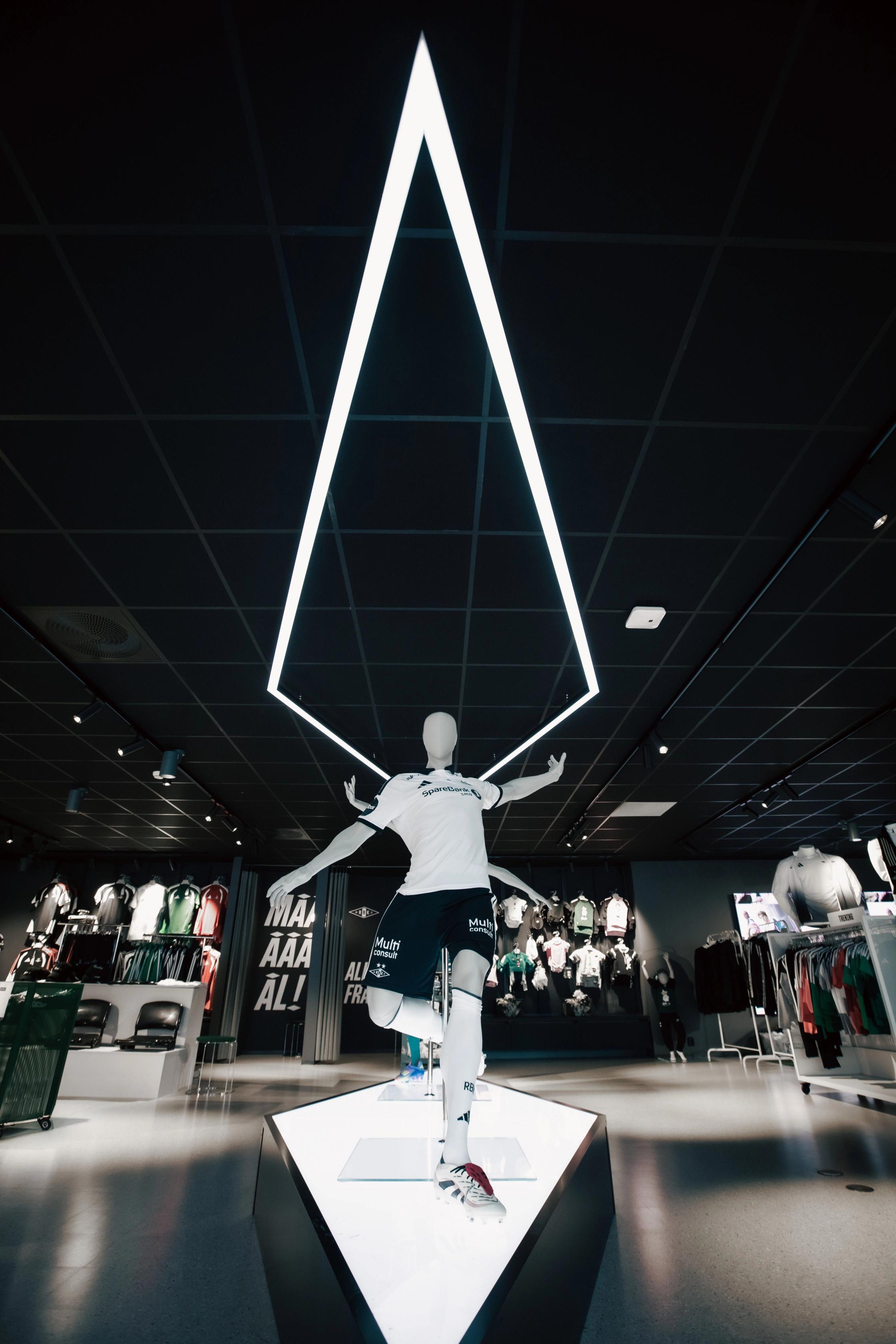
Nonspace started with the strategy and let five design principles guide every choice: materials, light, modularity, graphics and identity. Every decision in the concept can be traced back to a strategic choice. The diamond, the core of Rosenborg's visual identity and a direct reference to the founding year 1917, is the physical centrepiece of the shop.
What looked like a choice between efficiency and identity turned out to have the same answer: the diamond-shaped Rosenborg logo.
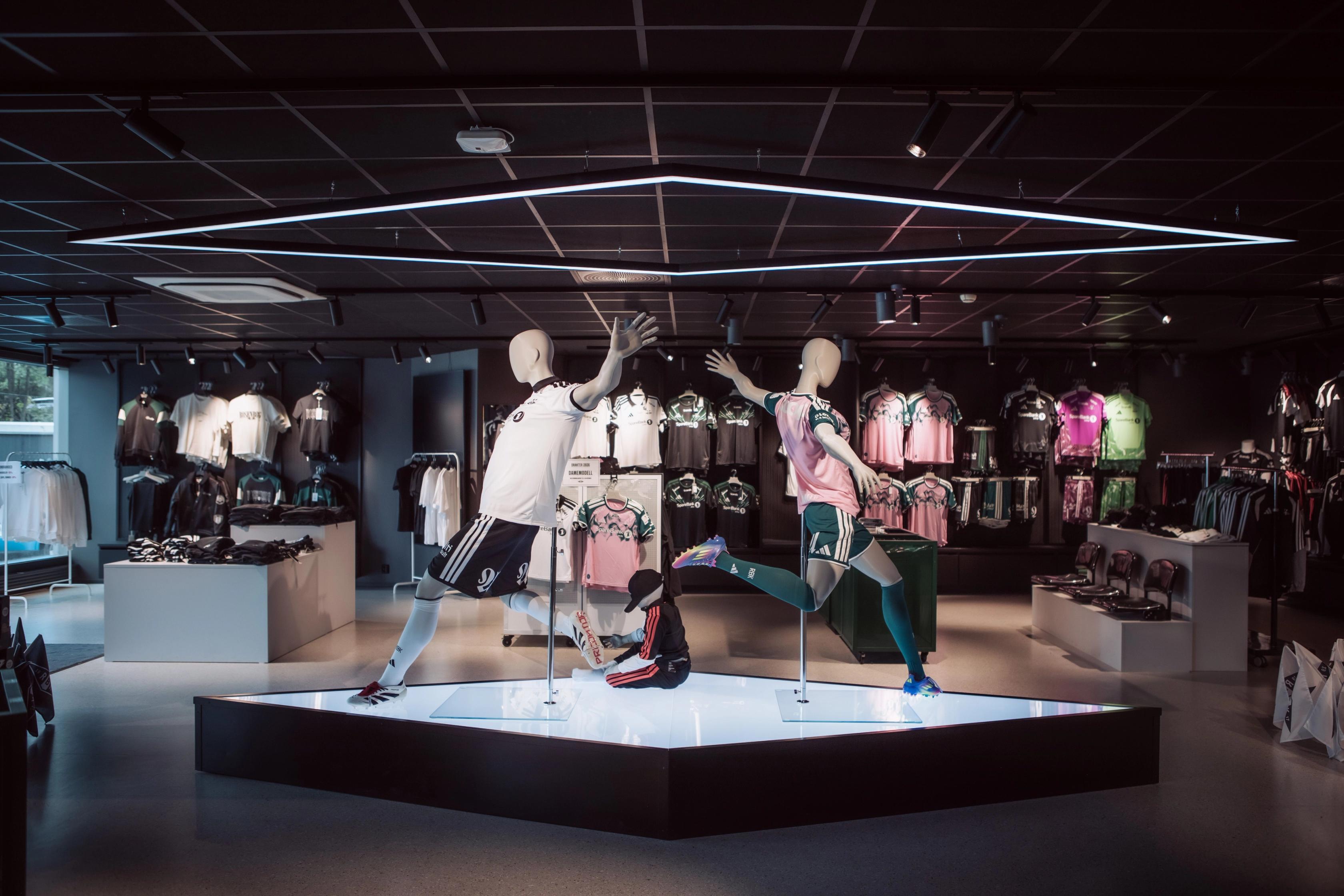
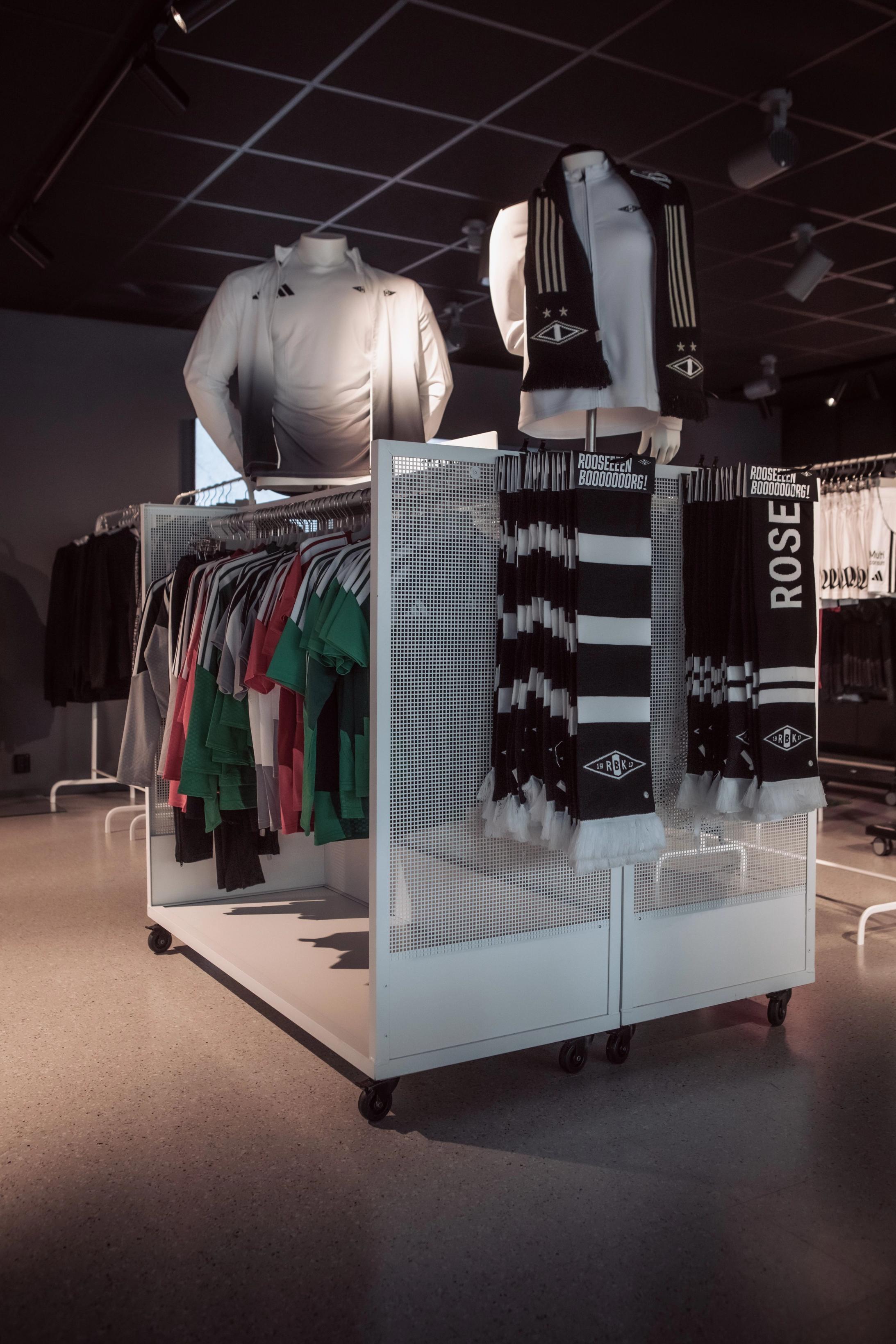
A lit podium on the floor in the centre of the store divides the space into four facets, and each corner defines its own zone for kits, leisurewear, events and service. The logo went from being a symbol to being a system for the whole shop. While most stores organise space by product category, Rosenborg Shop also lets the purpose of the visit decide the route. The result is a floor plan only Rosenborg could own.
In other words, the brand did not just get more room in the store. It got a job.
The pillar “for everyone” is solved through the zones themselves: Lifestyle and Leisure; Kits and Matchday Gear, with the home kit raised on a dedicated hero wall for devoted supporters; and Rosenborg Playground, a flexible stage with artificial turf and a big screen that can host player launches, kit and product launches, signings, press conferences and sponsor activations. On paper, the zone means fewer square metres for products, but a store that is only relevant when someone needs a new kit also has fewer reasons to be visited. The events give supporters a reason to drop in even when they had not planned to buy anything, and make Rosenborg Shop a place the club can use, not just a place it sells from.
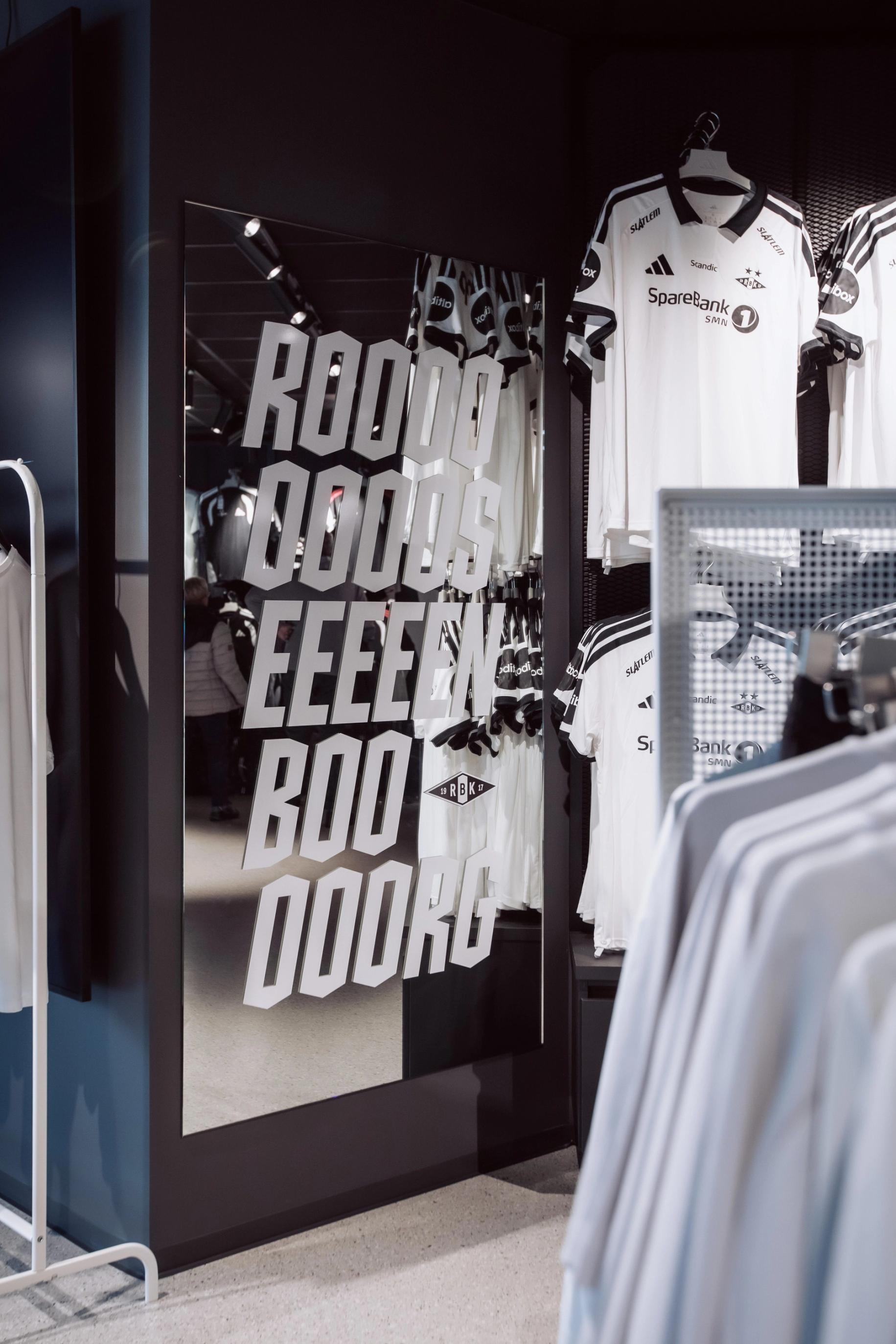
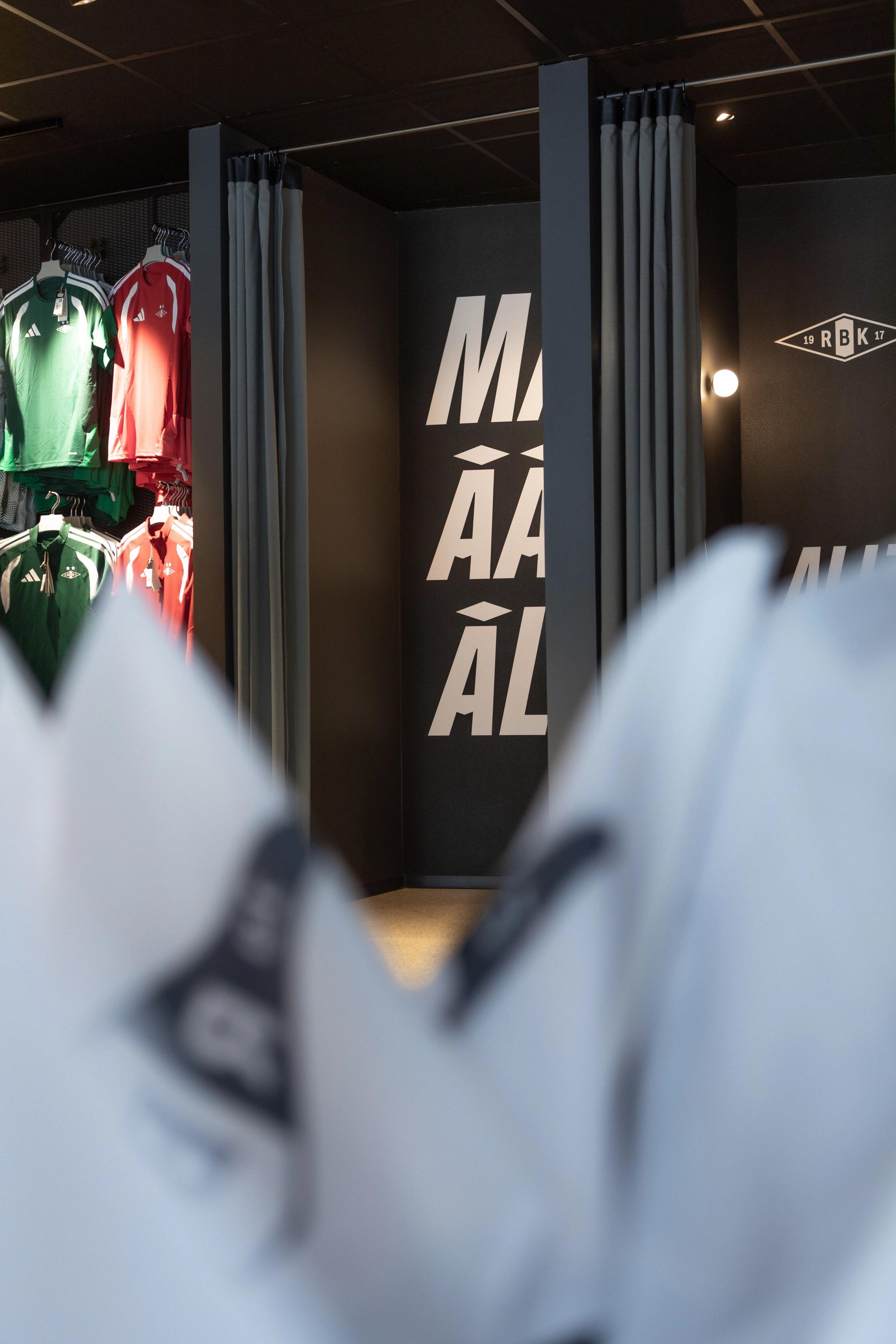
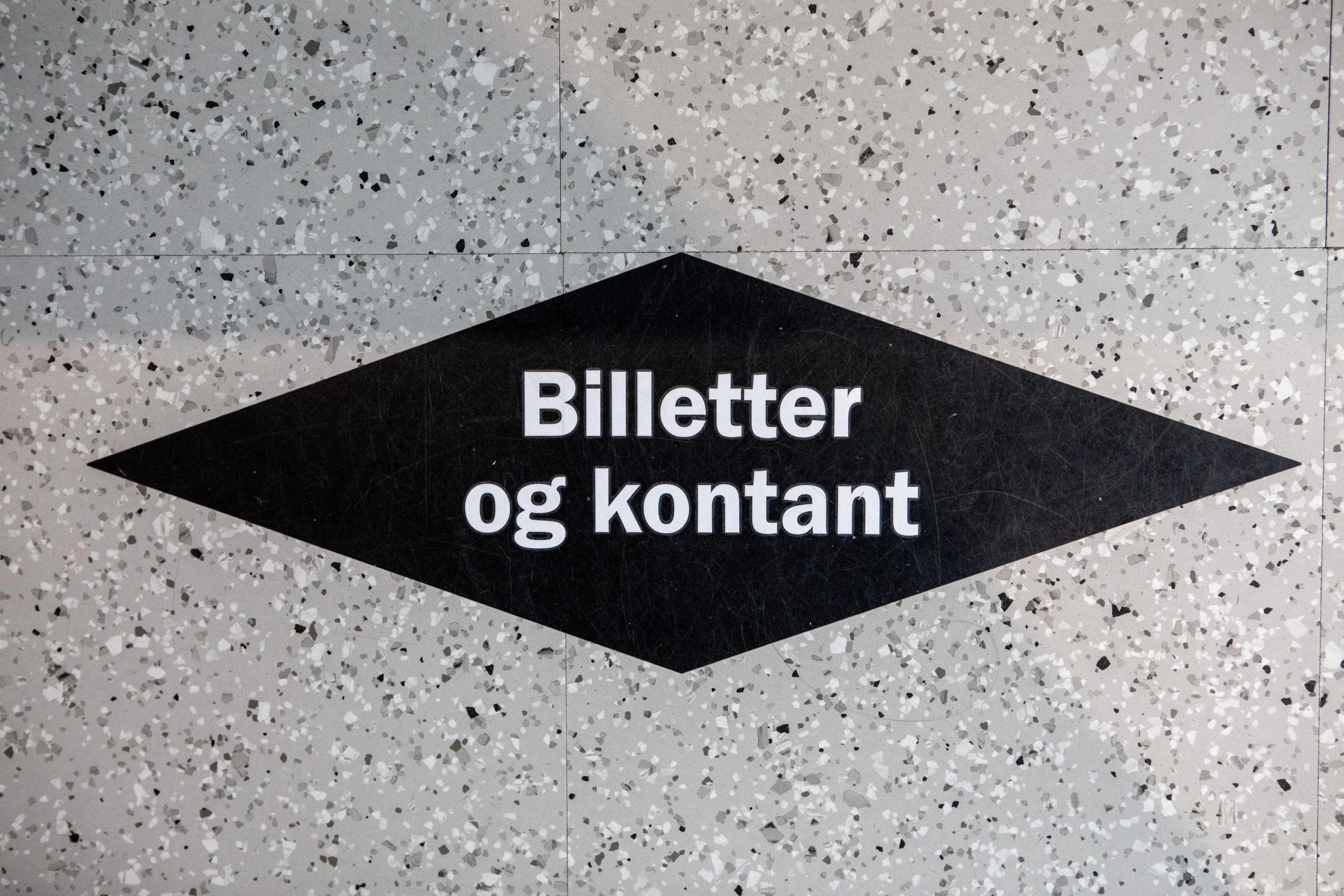
“Move” and “inspire” live in the store's sensory layer: a sound installation where pipes from the ceiling carry supporter chants from Øvre Øst, Nils Arne Eggen and the Rosenborg song into the room, and a history corner built as a mini-museum with old kits, trophies and goalkeeper gloves from club legends. The fitting rooms carry the promise itself on the wall: large-scale “Alltid Framover” typography in the club's typeface, together with the Rosenborg diamond. Mirrors are placed strategically in diamond shapes to lower the threshold for buying without breaking the identity's visual language, and a four-part signage system guides customers through the space without disturbing the visual calm the strategy calls for.
A store is created twice. First it takes shape on the drawing board, then it gets built. But a finished store is not necessarily a working store: only once it is in use do you see whether the design has turned into behaviour and the ideas into sales. After the reopening on 8 April 2026, average in-store sales per matchday visitor grew from NOK 14 in 2025 to NOK 24 in 2026, a 71 per cent increase, on a smaller retail footprint than before.
“The new store layout and customer journey work well. The queue system has given better flow and a more efficient customer experience, especially on matchday. Even though the retail footprint is smaller than before, the store feels bigger, airier and easier to navigate, with better product display and simpler wayfinding,” says Petter Skrove, Store Manager at Rosenborg Shop.
Interior architect: NOI AS
Architect: Selberg Arkitekter
Signage and decor producer: We Can Do It
Fit-out producer: Solid innredning
Would you like to know more about this?
Reach out to the team, we're happy to answer questions, receive feedback or discuss the topic.

Relevant cases

A Playful Visual Universe for the Next Generation of Art Lovers

Unbranded Drops

Technology Meets Consciousness